Caps are relevant in the period of lowering the air temperature on the street. It is for the head not to freeze, it is recommended to knit them using more dense techniques. In this article, you will get acquainted with the possible patterns for knitting the hats with knitting needles.
What pattern can you tie a hat with knitting needles?
For the cap, you can use any pattern on the technique: simple, embossed, openwork , etc. This can be done both on circular knitting needles and on individual knitting needles. In the first case, an integral product is obtained, and in the second case, it will have to be sewn from the back. First of all, the choice of the pattern for knitting depends on the skills of the master, if she is a professional, she can choose any, but it is better for the beginners to choose the simpler versions.
Simple knitting patterns for hats
Eraser 2x2
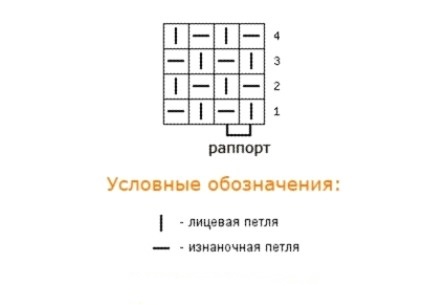
The hats made in this drawing always remain popular, but they do not require great skill. The scheme of this pattern looks like this:
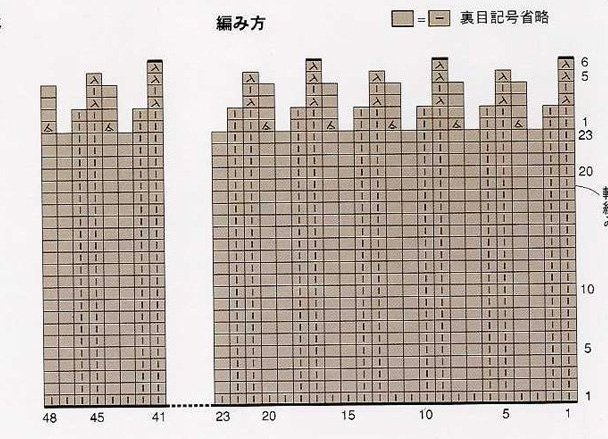
It does not indicate the edge loops performed at the beginning and end of each row.
Performance:
- We type loops. Their number must be a multiple of 4.
- The first row is bred, alternately alternating 2 face and purl loops. In the end, two facial lines must necessarily be performed.
- The second and all other series should be knit by analogy of the first, i.e. clearly following the algorithm described above. The most important thing is that the facial should be facial, and the purl over the purlins.

Handkerchief pattern
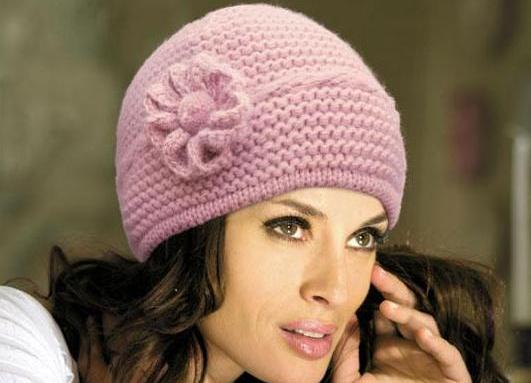
To connect such a cap, no circuit is required, since all odd series (1, 3, 5, etc.) should be tied with face loops, and even ones (2, 4, 6, etc.). ) - purl. They look very beautiful in thick threads, decorated with flowers or leaves.
Chess player
It is executed under the scheme:
| | |
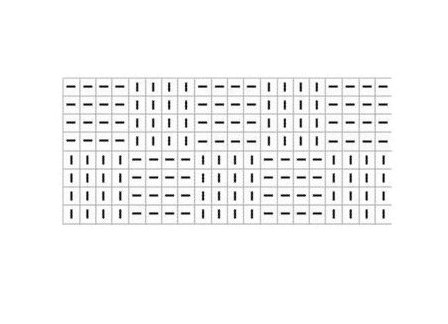

For knitting you need to type a multiple of 4 the number of loops and add 2 edges to it, which must be done at the beginning and end of the rows.
Progress:
- From the 1st to 4th rows we sew, alternating 4 face and purl loops.
- From the 5th to the 8th row alternately we sew 4 back and front.
- From the 9th we begin to repeat the 1st row.
The hat with such a pattern looks nice and with an elastic underneath, and without it.
| | |


Great popularity is also enjoyed when knitting warm hats, relief patterns "honeycomb" and "pearl" in both small and large versions.
| | |
| | |

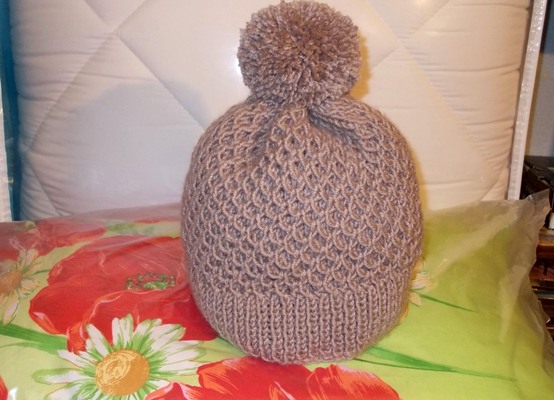
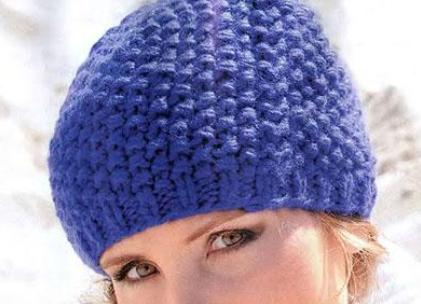
They are very dense, so the clothes associated with such techniques are warm even in winter.
Scythes
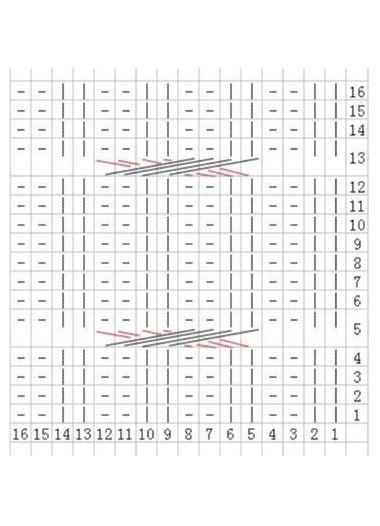
This pattern is very common, and it can be combined with other elements of knitting. Classic "pigtails" perform according to the following scheme:
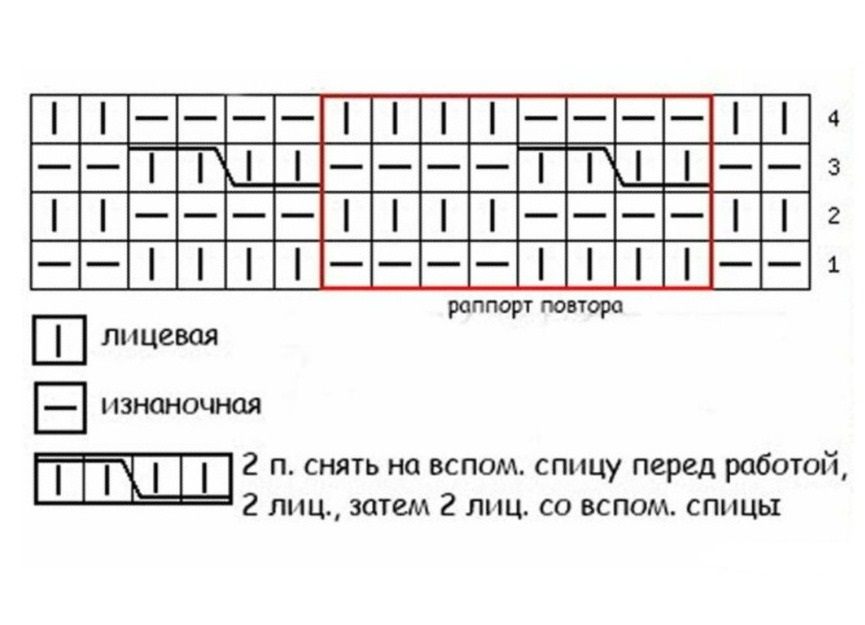
The number of dialed must be a multiple of 8 and add 2 edges that are made at the edges of each row. The repeating site is tied as follows:
- in the 1st row we alternate 4 face and purl.
- in the second row we change their places: 4 purl and 4 facial;
- in the 3rd row: 2 loops take off on the auxiliary spoke, we sew 2 facial knots and then we sew the loops with the facial ones, which were transferred to an additional spoke, 4 purl;
- in the 4th row we repeat the second: 4 purl and 4 facial.
It will turn out such a pretty hat.
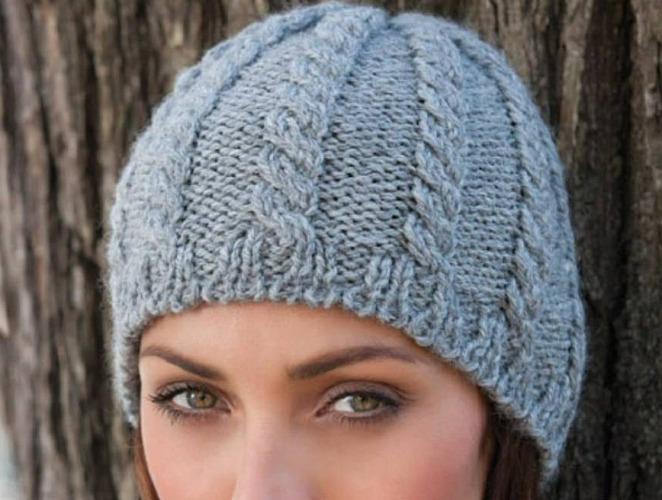
If you want to make the pigtails thicker, then the pattern of knitting needs to be slightly changed.
On warm autumn and spring it is recommended for knitting with knitting needles to use lacy patterns. We give some examples of schemes for some of them.
| | |
| | |
| | |
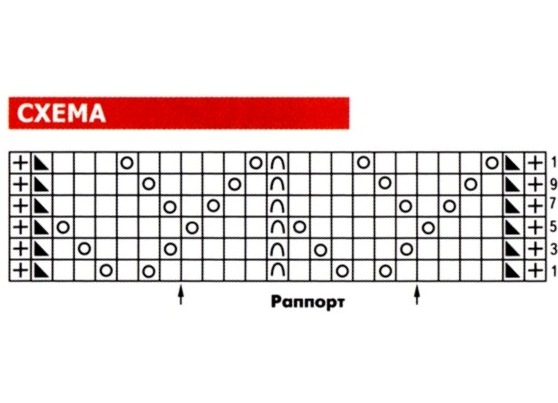
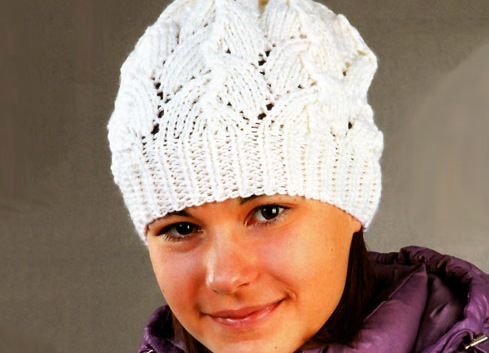

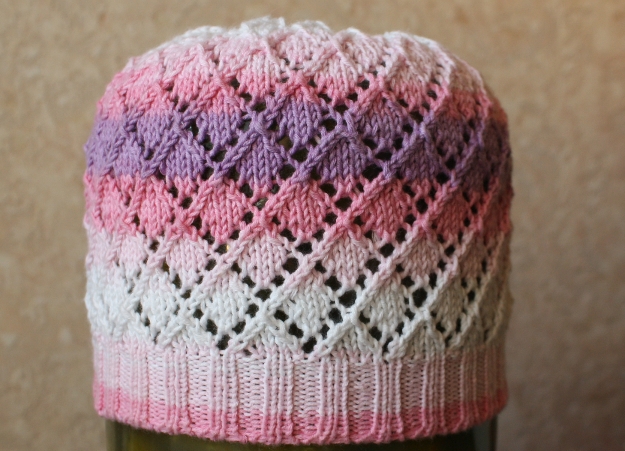


If you are going to make a hat, it depends on your preferences, which pattern will be the most beautiful for knitting hats with knitting needles. After all, each of them is attractive and interesting in its own way. A perfect addition to the new headdress will be a scarf (snood or shirtlet) and mittens, made with the same pattern.
| | |


In addition to the hats with knitting needles, you can tie berets and kepi using the same patterns.