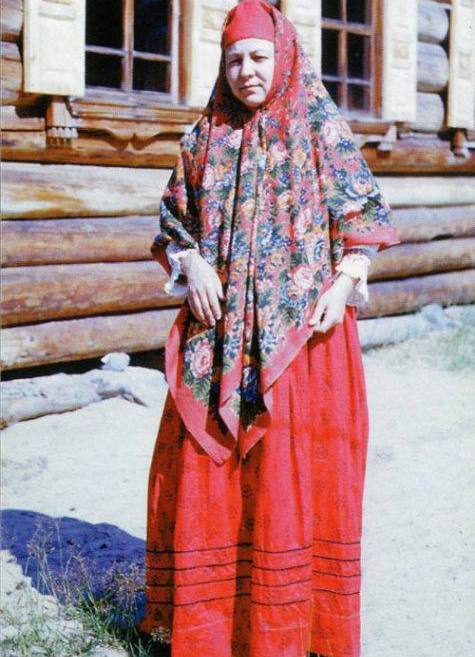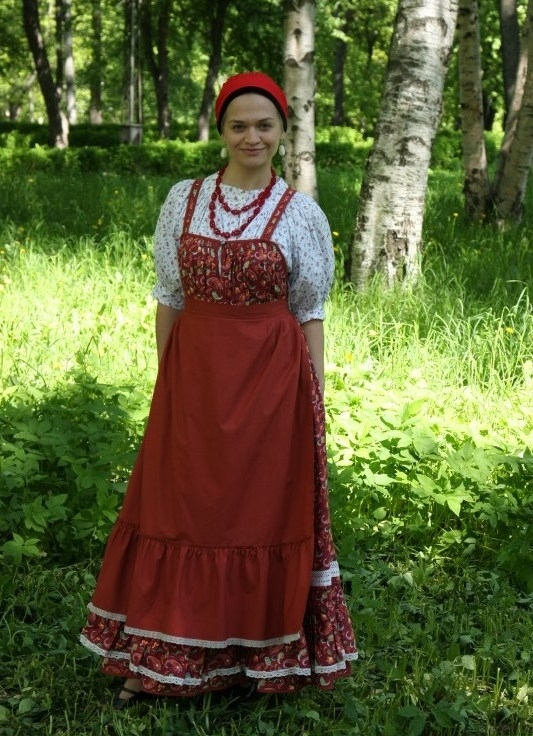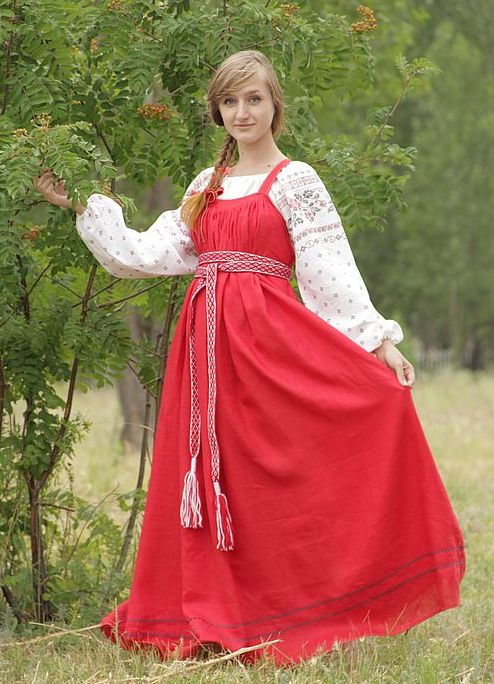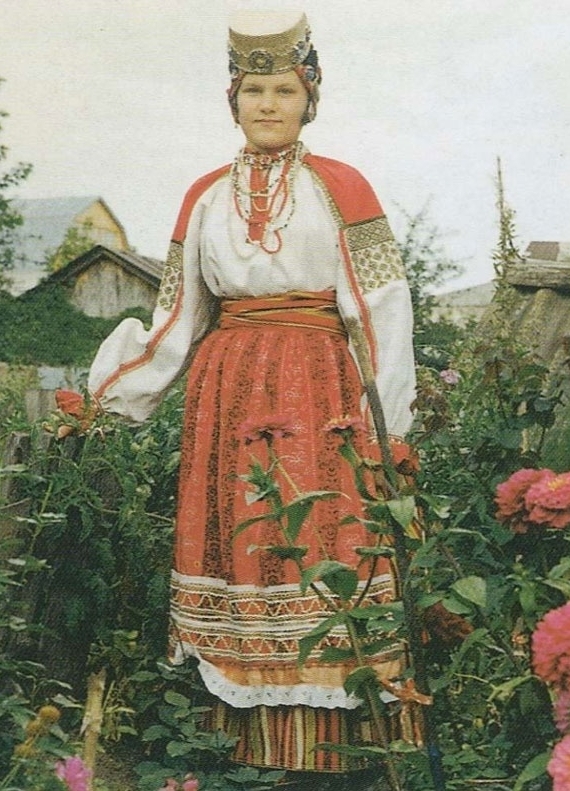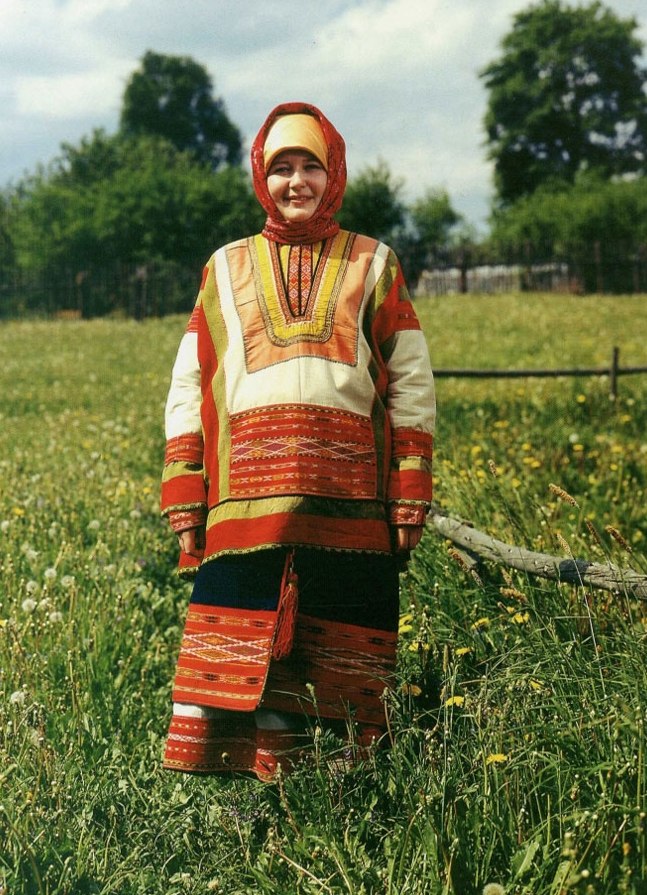
Dresses in Russia have always been famous for their rich colors and patterns. Obligatory in the image were headdresses. The main forms of the costume were trapezoid and straight.
By the costume you could judge from which province, county or village girl. Each type of clothing in Russia had its own significance. There used to be costumes everyday, festive, wedding, funeral. The red dress was considered the most solemn. At that time, the meaning of the words "beautiful" and "red" and in principle had the same meaning.
In Russia all the outfits were sewed from homespun cloths, but from the middle of the 20th century they were replaced by factory fabrics, the fashion of which came from Europe at the appearance of Peter I.
What does the traditional Russian folk costume look like?
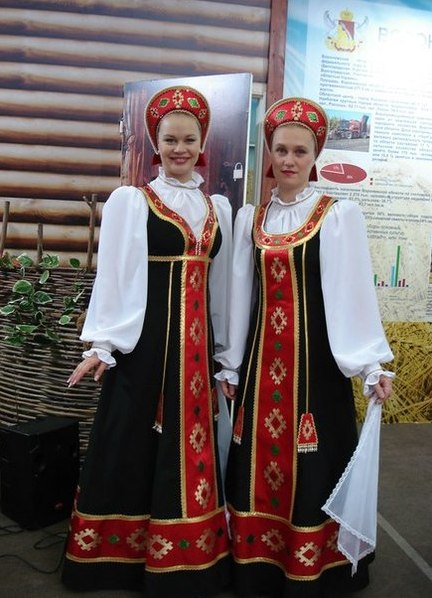
The northern Russian folk costume has some differences from the southern costume. In the north, it was customary to wear a sarafan, in the south - ponevu.
The women's shirt was similar in appearance to the man's. She was straight and with a long sleeve. It was customary for the shirt to be decorated with patterns on sleeves, on the sleeves, on the shoulder and on the bottom of the product.
Despite the soon-spread European fashion, the northerners preserved certain traditions of the Russian folk costume. The so-called "epanechki" and ghosts were kept. They were with sleeves and quilts on cotton wool. In addition to the sarafan, the northern costume was also distinguished by a brocade shirt, the same "epanechka" and a smart kokoshnik .
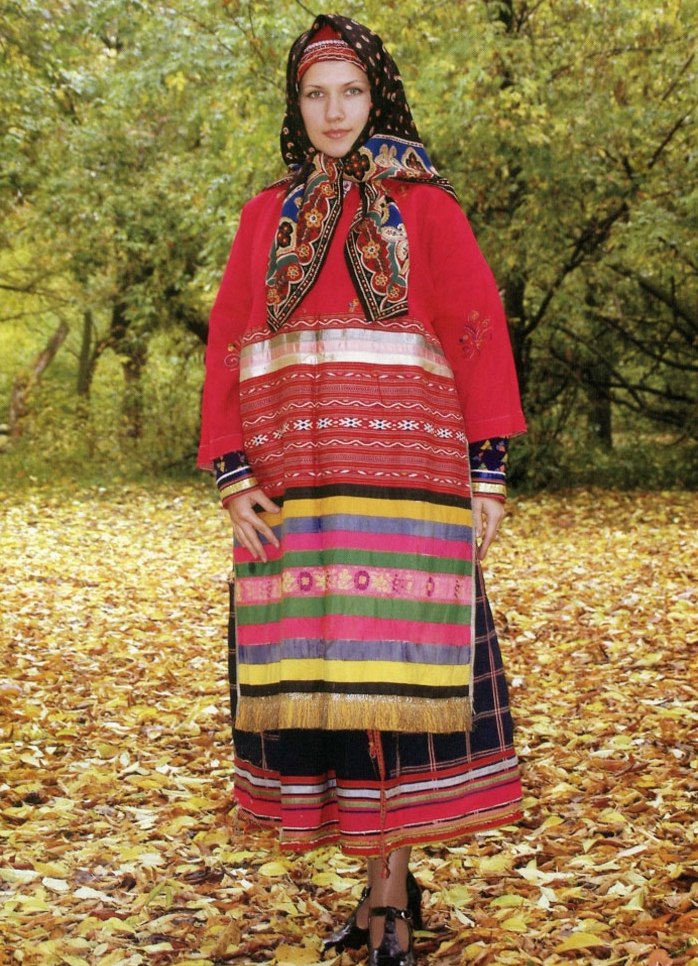
In the south instead of a sundress, poneva was used. This waistcloth was made of wool on a linen lining. Poneva, as a rule, was blue, black or red. Striped or checkered fabric was also widely used. The everyday ponies were decorated quite modestly - woolen homespun patterned braid.
Poneva did not distinguish a female figure, but rather concealed all her majesty and beauty at the expense of her direct silhouette. In the event that poneva depicted the waist, she was hid with an apron or a shirt. Often over his shirt, poneva and apron worn bib.
In general, the traditional Russian folk costume was multilayered. As for the headdress, then there were also their own rules of wearing. Married women had to completely hide the hair, the girls were allowed not to cover their head at all. An unmarried girl had to wear a ribbon or a hoop. Widespread were kokoshniki and "magpies".
The girl in the Russian folk costume always looked beautiful and majestic. Its bright, feminine image was supplemented with beads, earrings, various necklaces and pendants.
On the legs of Russian beauties you could see leather boots, cats, and also famous bast shoes.
| | | |
| | | |
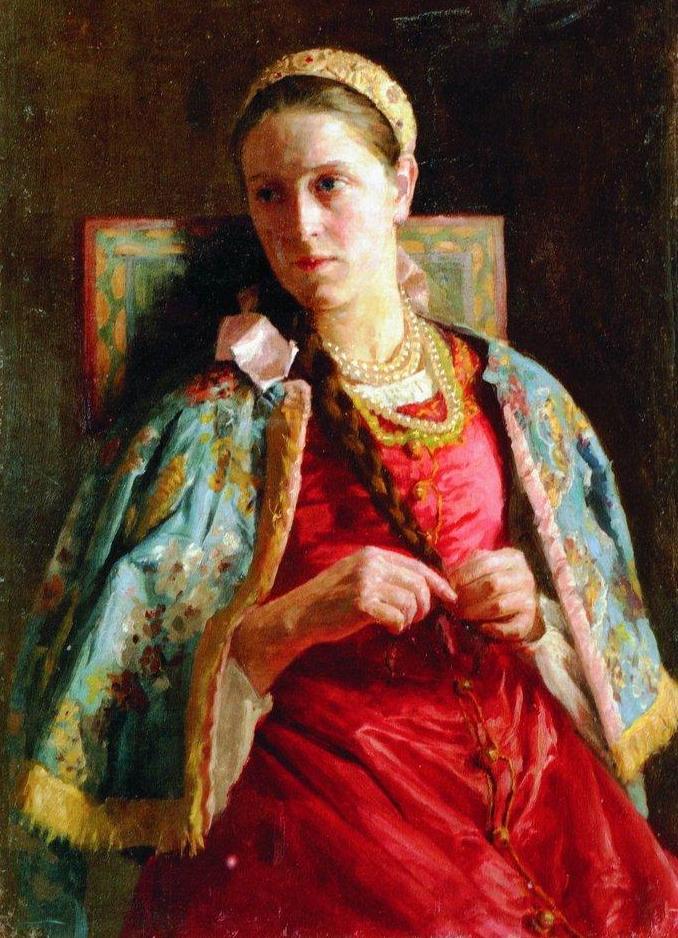
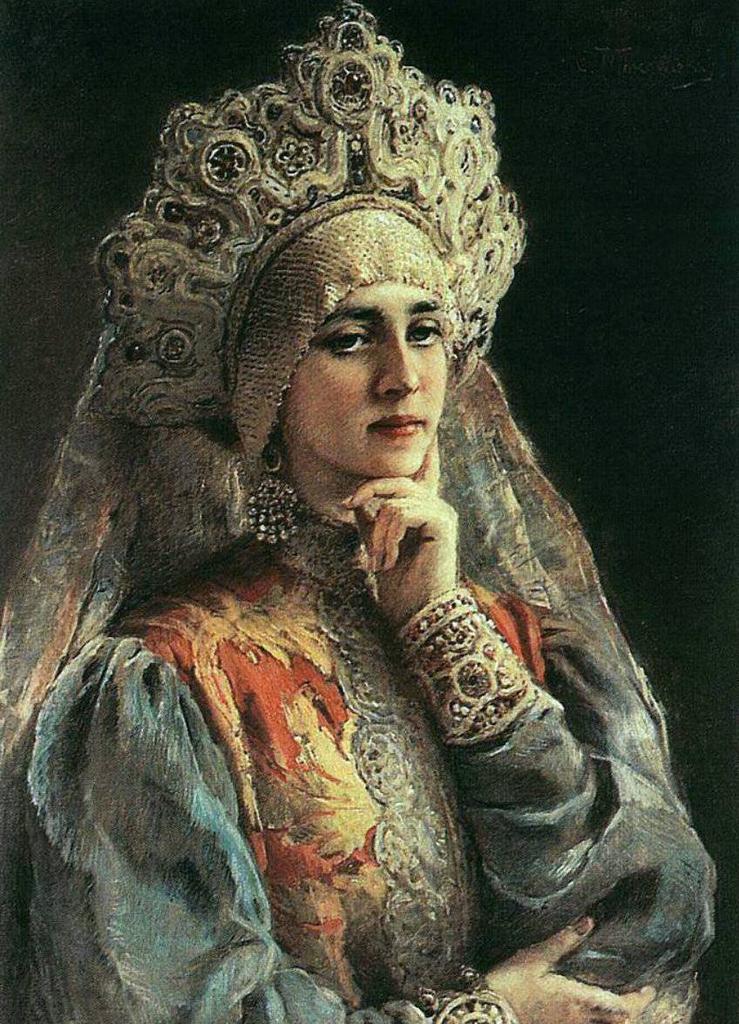
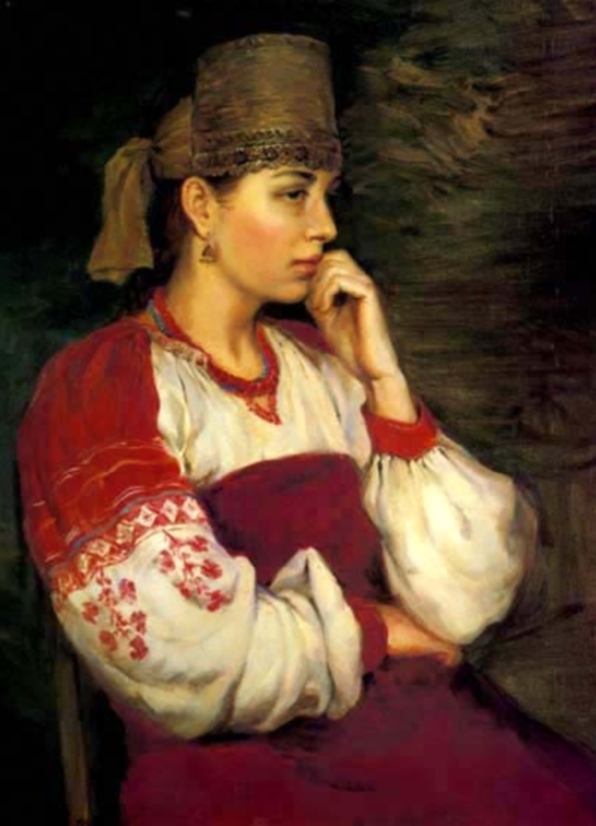
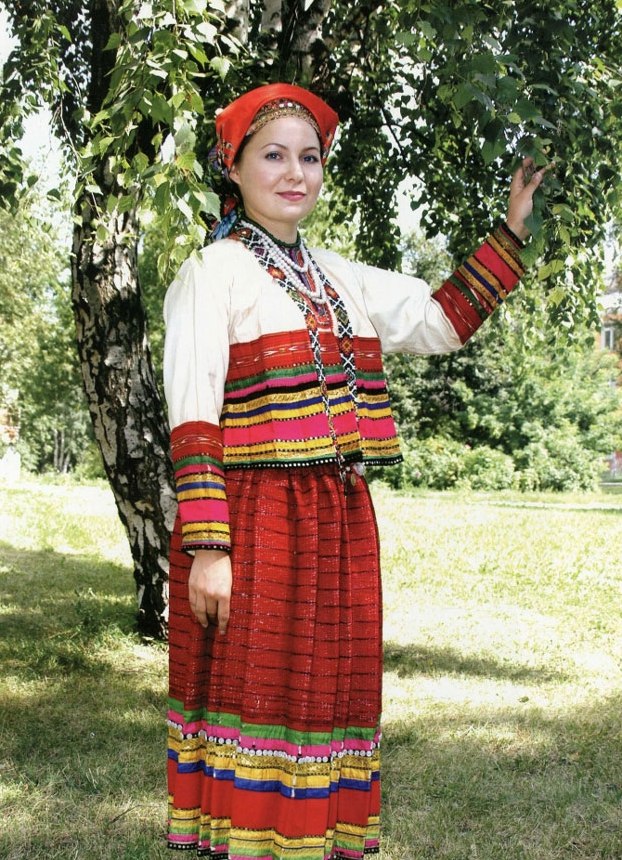
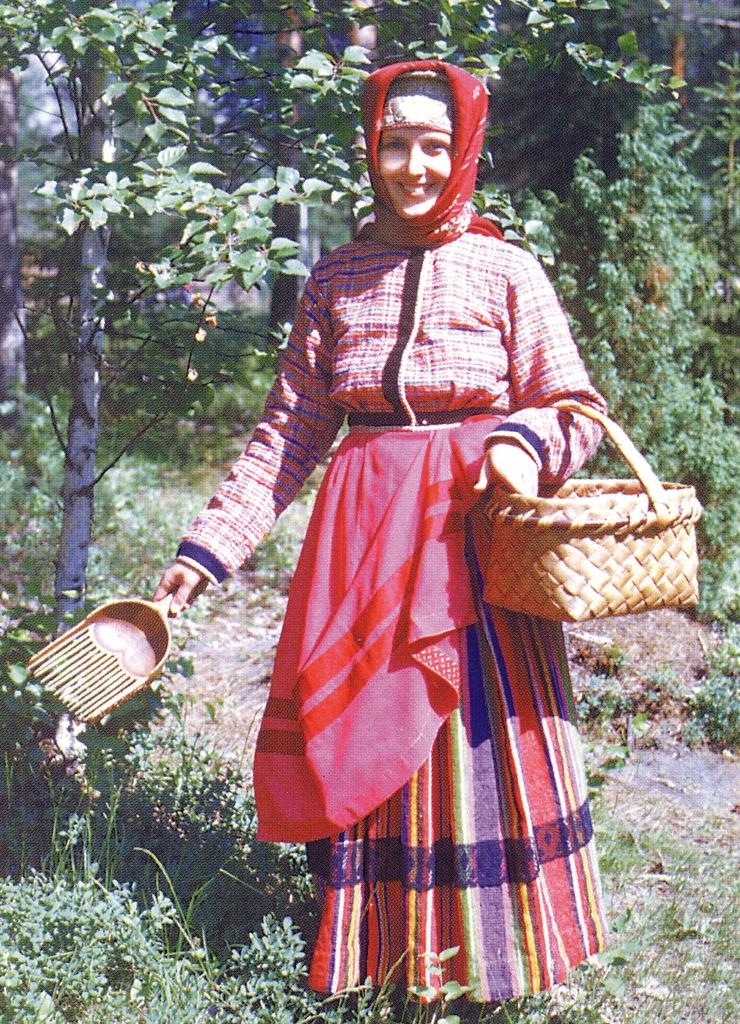
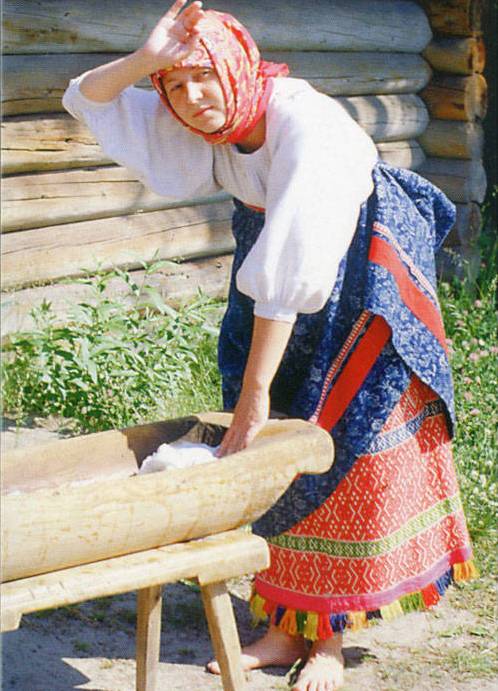
Skirt and apron in Russian folk costume
This subject of the women's wardrobe appeared much later than the rains. Poneva differed in that her cloths were not sewn together, and the skirt was sewn and gathered at the waist in the girdle. The skirt was of particular importance in the status of a woman. Married girls were allowed to wear a skirt opening their feet. A married woman always closed her heels. Full woman in Russia - was considered a symbol of health and prosperity, so many girls on holidays often wore a few skirts to seem lush. The apron in the Russian folk costume also played an important role. Initially, he covered the dress while working. Then the apron became a part of the Russian folk costume. In this case, it was made of white linen or cotton fabric. The apron was necessarily decorated with luxurious ribbons and embroideries.
| | | |
| | | |