What types of germ cells are secreted?
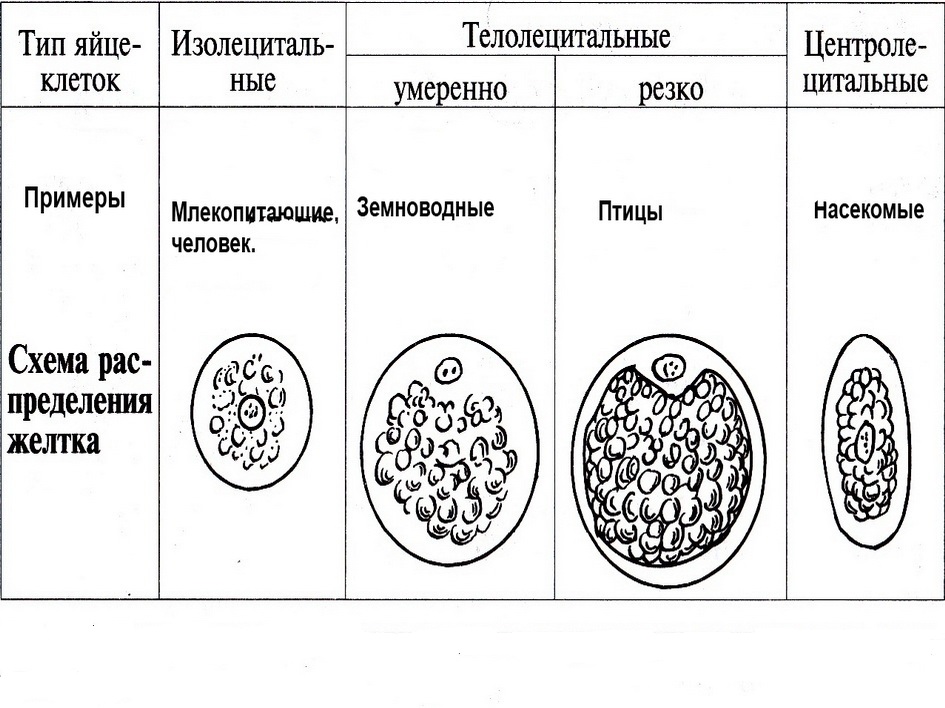
So in biology, depending on the amount contained in the yolk ovoplazme (nutrient supply), it is customary to distinguish 4 types of ova:
- alecital - oocytes, in which the yolk is completely absent;
- oligoletsitalnnye - in the composition there is a small amount of yolk. This type is characteristic of most invertebrates, as well as mammals. The same type of egg in man;
- mesolecital - contain a moderate amount of yolk (amphibians);
- pollecital - sex cells, which are very rich in yolk. This type of egg is characteristic of reptiles, fish, birds.
Also, depending on how the yolk is distributed directly in the ovoplasma, it is customary to distinguish:
- isoletsitalny - uniform distribution of yolk in ovoplazme;
- anisoletsitalny - the yolk is distributed unevenly on the egg. In this case, this subtype can also be subdivided into telolecital (the yolk concentrates at one of the poles) and centrolecital (the yolk is concentrated in the center, is located around the nucleus and is surrounded by a narrow rim of ovoplasm).
What are the differences in the structure of the eggs?
The above classification of egg types indicates differences in their structure and fully reflects the structural changes in the sex cells in the process of phylogenesis.
Eggs of all mammals, including humans, which are at the top of historical development, according to their internal structure belong to oligolecital.
This structure, first of all, is due to the fact that the need for accumulation of nutrient material in the ovoplasma is absent, because the development of the embryo proceeds in the uterus. Necessary nutrients the fetus receives along with the blood flow.
In animals, the initial stages of phylogenesis, up to the birds, the yolk in the egg contains little, since the development of the organism occurs in the aquatic environment.
The increase in the yolk volume in reptiles and birds is explained, first of all, by the fact that the embryos of these animals are in a closed space and surrounded by dense, practically impenetrable egg shells.